
Outstanding in their fields – a sunlight-driven carbon removal prototype is heading for CSIRO’s field research facility
In September, Seattle start-up Banyu Carbon shipped a unit based on an innovative direct-air-capture (DAC) technology to Perth, and a small team arrived in early October to set up a month-long trial at CSIRO’s In-Situ Laboratory (ISL) facilities in the heart of Western Australia’s agricultural south-west.
Their goal is to have the fridge-sized unit running for visiting delegates from the 18th Greenhouse Gas Control Technologies Conference (GHGT-18), opening in Perth on 25-29 October.
Both teams have been running hard to make the showcase happen. According to Dr Ludovic (Ludo) Ricard, who leads the ISL project, the idea for the demonstration only came in discussions with Banyu a few months ago. The container has already been fitted with all the necessary services, and the Banyu team should be able to plug its unit in and switch on.
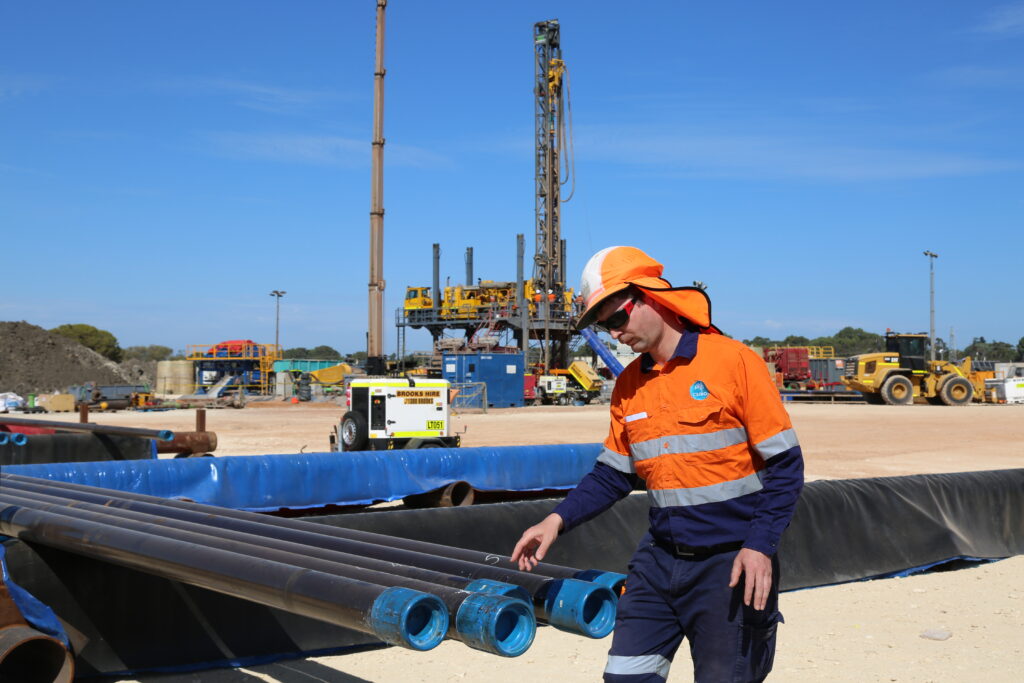
Dr Ludovic Ricard at CSIRO’s In-Situ Laboratory inspecting drill strings ahead of an earlier CO2 injection project. As well as hosting GHGT-18 Conference delegates to the ISL site, Dr Ricard will be presenting a poster at the conference
Delegate interest in the technology and the site is high – tours of the ISL are already booked out.
“It’s a great opportunity for CSIRO to collaborate with a startup company and deploy a prototype unit in Australia,” says CSIRO Business Development Manager Chanti Richardson.
Refining a decade-old idea
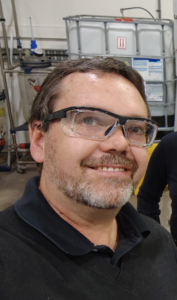
Dr Graeme Puxty has helped CSIRO pioneer carbon capture chemistry and global partnerships
The chemistry behind Banyu’s kit began in CSIRO’s Newcastle Energy Centre in 2013, where researcher Dr Robert Bennett showed that light-sensitive compounds called photoacids could pull carbon dioxide out of a capture solution without the heat required in conventional capture systems.
After filing a patent in 2014, CSIRO continued working the concept to 2016.
“We developed it to the point of proving the principle and the feasibility at lab scale and then moved on to other work that had priority,” says CSIRO Senior Principal Research Scientist Dr Graeme Puxty.
That changed when Banyu approached CSIRO for an exclusive licence in late 2024 to take their carbon capture ideas further. Co-founder and CEO Dr Alex Gagnon says early versions of the photoacids – essentially dyes – were too experimental for commercial use, so his nine-person University of Washington spin-out spent three years refining the chemistry. Its improved dyes now last longer, hold more carbon dioxide and work under conditions that make carbon capture more practical. This technology holds promises to deliver carbon removal with substantially lower energy needs than competing approaches.
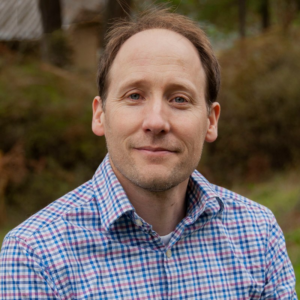
Assistant Prof Gagnon is advancing CO2 removal technology developed with co-founder Prof Julian Sachs at their company, Banyu Carbon Inc
From the ocean to the air – how Banyu’s process works
Banyu’s technology applications began in the sea, with the initial idea of using the photoacids to draw CO2 out of seawater, which is a colossal natural reservoir. Dr Puxty likens this to “using the ocean as a big gas-liquid contactor.” Moving to engineered air capture was “the step change for broader deployment,” he says. Dr Gagnon, a professor of chemical oceanography, agrees but for him the drivers to prioritise air capture also include customer interest – he has significant seed capital tied to the development – US tax incentives and still-maturing ocean monitoring rules, but he expects to carry the lessons of current tests back to ocean-based carbon removal in the future.
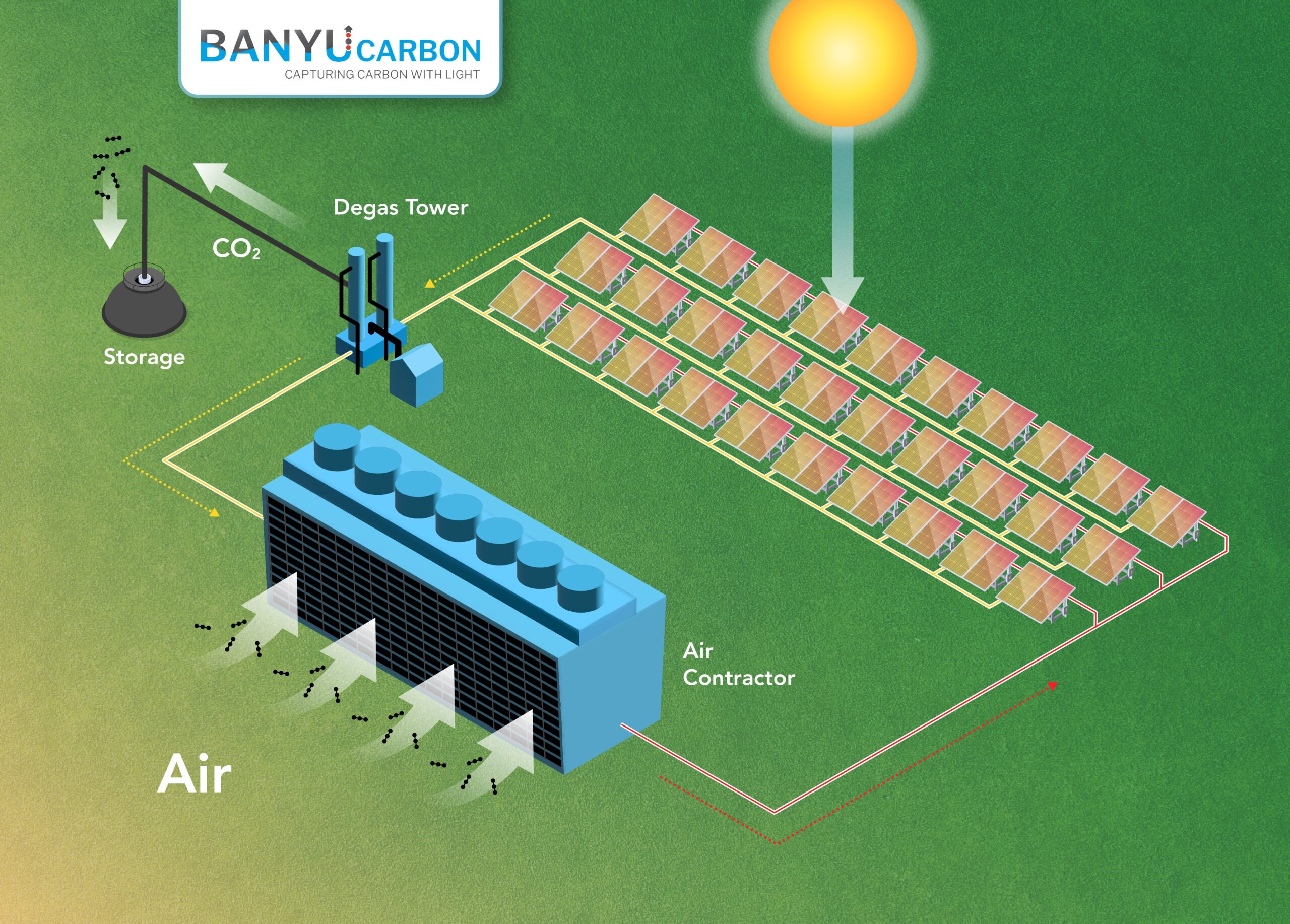
Banyu’s system passes air up through a packed column gas-liquid contactor, while a water-based solution containing Banyu’s dye trickles down. In the dark, the dye absorbs the CO2. The liquid then flows within clear panels akin to solar hot water collectors. Sunlight turns the dye acidic, releasing a gaseous stream of CO2, and the solution returns to the gas liquid contractor to reload. The resulting CO2 stream can be stored to produce carbon credits or put to industrial use for green chemistry applications.
The column packing and the gas separation use established engineering. Dr Gagnon says the new parts are the dye, the way the pieces fit together and the reactor that uses sunlight to drive a chemical process.
Why Harvey makes sense
Dr Gagnon says US storage sites are typically too big to consider hosting startups, but “this special spot in Western Australia is one of the few in the world that is the right size and the right sort of scientific mentality for startups,” referencing CSIRO’s reputation. Harvey’s dry, sunny conditions also suit a field trial that harnesses sunlight.
The ISL is a 1.6-hectare research site with 13 wells, the deepest reaching roughly 1,000 metres. They cross a fault structure about 150m wide at around 700m depth.
Dr Ricard says that after testing more than 20 storage technologies, this is “the first time we are deploying a carbon capture technology at the site”. DAC units are still prototypes with very small footprints, he says, so a research facility is ideal to test integration.
Banyu’s demo unit will vent the CO2 it captures to air during the upcoming test, but Ms Richardson says the ISL is “linked to an operational well, where in the future, the carbon dioxide that’s captured could be coupled with storage and measuring and monitoring verification could happen on site.”
Capture and storage need each other, Dr Ricard says: “One cannot live without the other.”
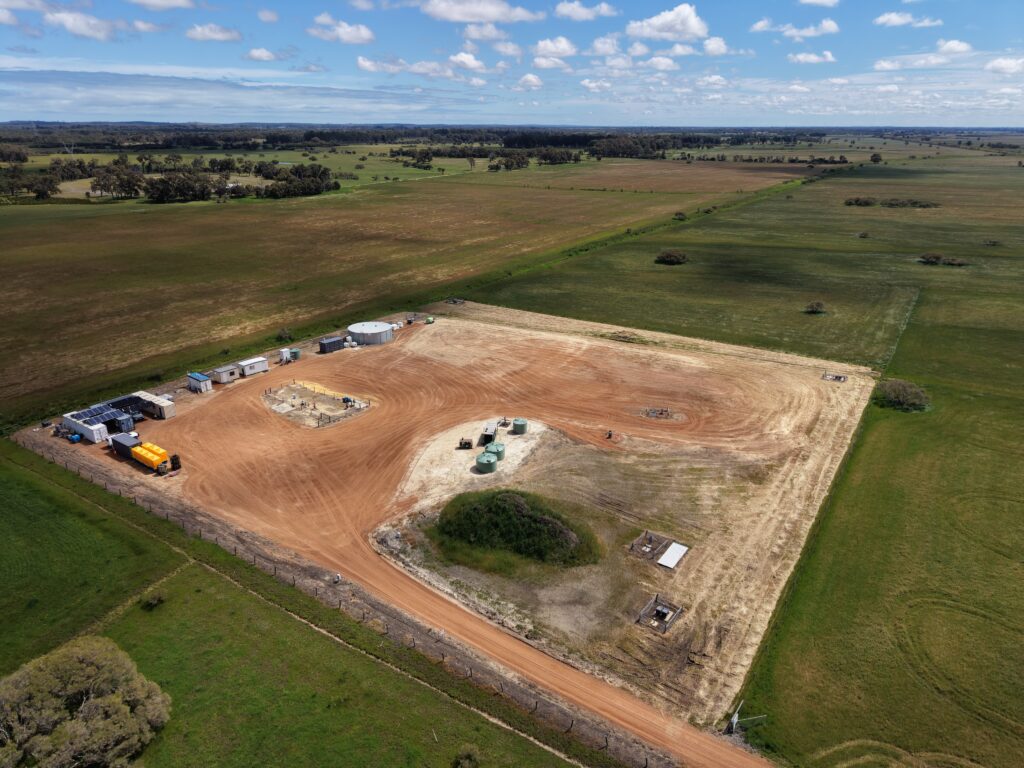
Between projects: The site of CSIRO’s In-Situ Laboratory 130km south of Perth where scientists work with industry to test and research the injection and sub-surface storage of CO2
The trial and what comes next
Dr Gagnon says the demo unit is 10 to 20 times larger than anything Banyu has run before, calling it “the first stepping stone” to commercial scale-up. He puts Banyu at Technology Readiness Level 3 to 4 and is hoping the trial and continued work with CSIRO will lift that by one or two levels.
“We know the dyes are good – the real test is outdoor performance across multi-day cycles in sunlight, he said.
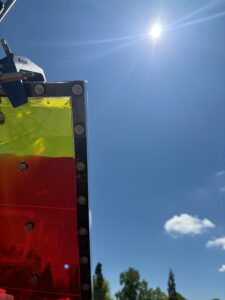
A previous Banyu experiment where photoacid loaded with CO2 was activated by sunlight in a photoreactor
Dr Ricard says one of the ISL’s end goals is moving CO2 from air to rock and says talks about injection to “demonstrate end-to-end a full value chain” are already underway. “The conference was just a way to get started.”
The ISL aims to position itself as a full carbon management research facility where DAC technologies could be trialled aside storage research activities. While it the amount of CO2 that Banyu’s unit will harvest is modest during this test, Ludo says the ISL has more than enough capacity to prove the permanent storage at trial and pilot scale.
ISL is also actively looking for other DAC trials.
“It’s fantastic to see Banyu Carbon on board as the first one,” Dr Ricard says, and Chanti hopes Banyu’s prototype unit will “send signals to the marketplace that this facility is open for research for other organisations.”
For Dr Puxty, the wider prize is in the photoacid chemistry. Because it does not use the heat and power that most capture systems require, he says it is “particularly appealing for capture applications in remote locations.”
The local picture
The ISL sits among working farms, and maintaining strong relationships with neighbouring landowners and the local community is an important part of its operations.
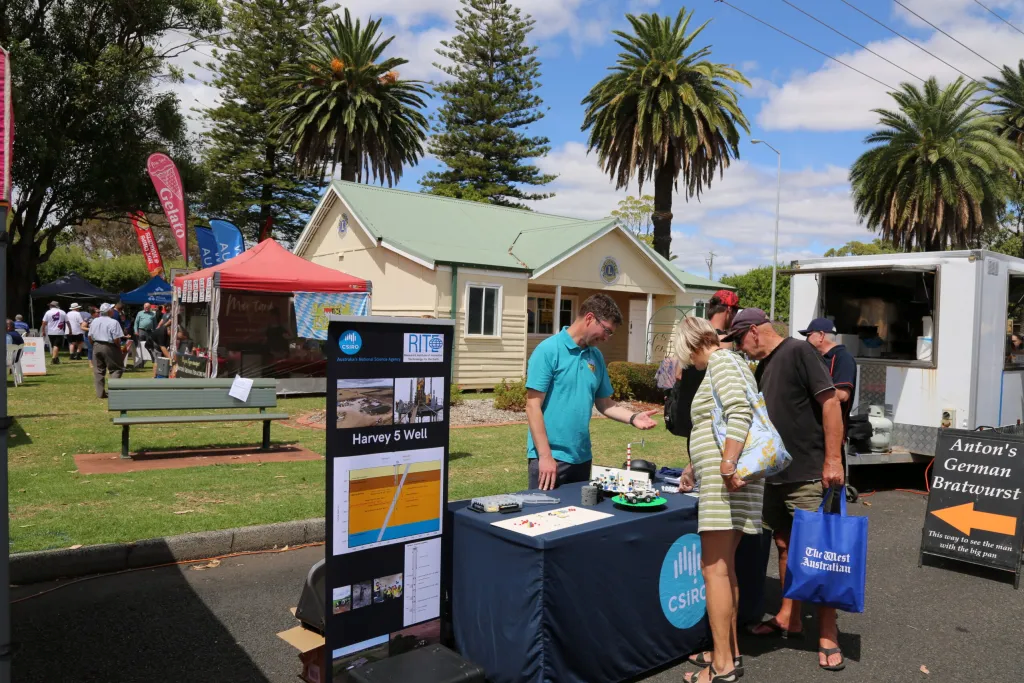
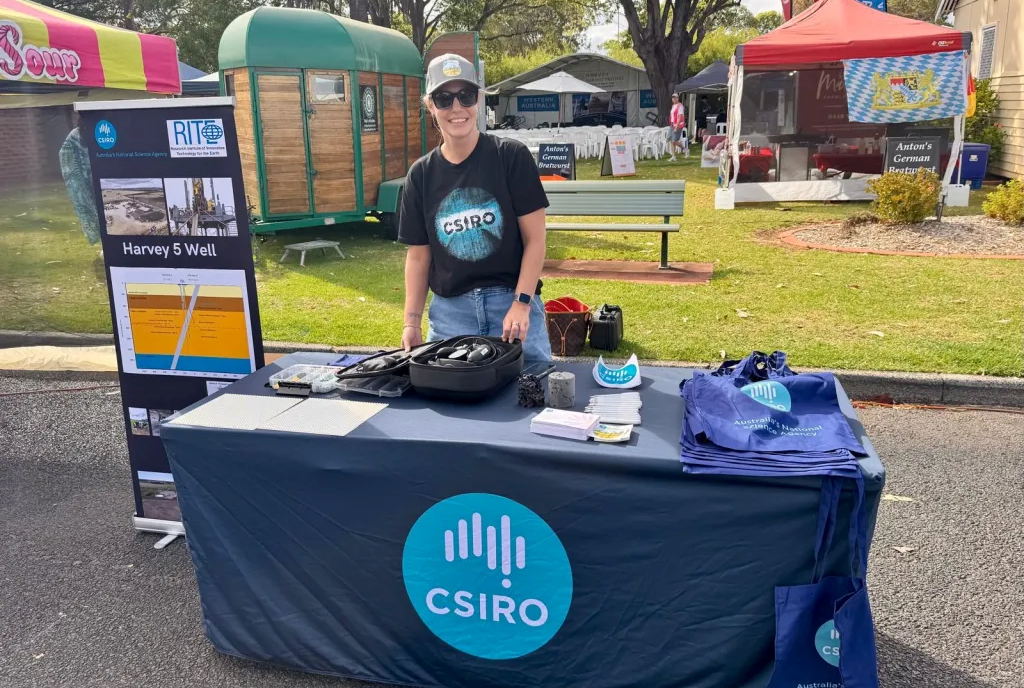
This includes CSIRO’s engagement in the annual Harvey Harvest Festival in early March where information on upcoming projects, such as the ISL’s previous Harvey 5 drilling campaign, is shared with the community.
“We have talked with some of ISL neighbours about the Banyu trial and there is a positive level of interest and curiosity in the activities and what the technology could potentially offer,” says Bianca Moiler, ISL Stakeholder Engagement Lead.
For Dr Gagnon, he is excited to be at the site in person and understand CSIRO’s local community ties.
His team is certainly getting a better feel for that during its month in Australia – it will be harvest time in the region when the trial begins.
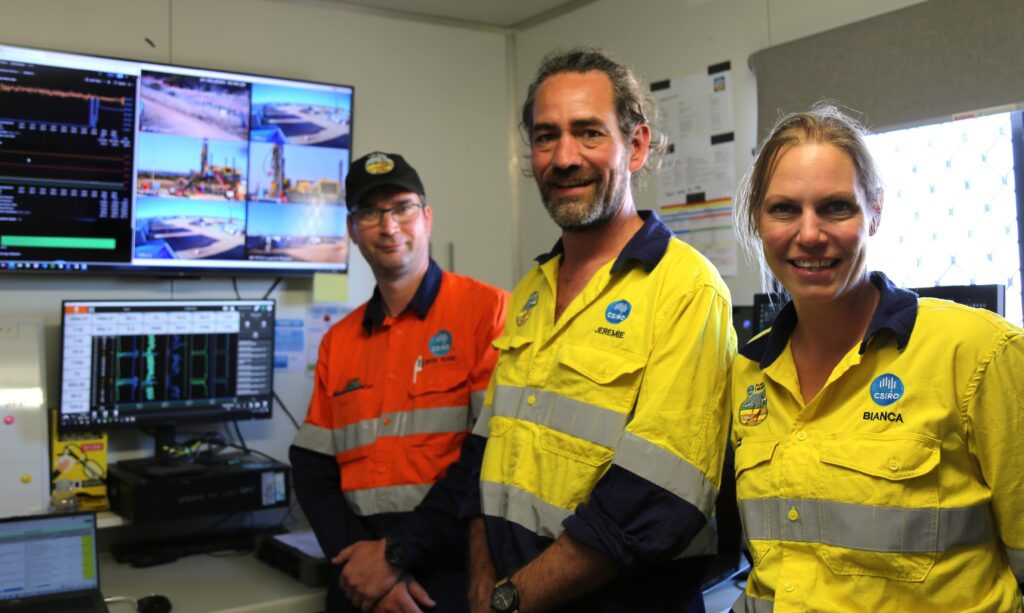
Given local curiosity in research taking place at the ISL, Dr Ludovic Ricard, Dr Jeremie Duatriat and Bianca Moiler acknowledge responsibility to regularly assess project activities and monitoring results to share with the surrounding community.
Discover more on the projects and collaborations at CSIRO’s In-Situ Laboratory: Dedicated carbon management to a fault